Exercise and healthy ageing: what really makes a difference?
The strongest practical guidance isn't about reversing your age. It's about keeping your heart, muscles, balance and independence working as the years pass.
In 30 seconds
- Moving regularly helps protect your health as you get older.
- Walking, cycling or swimming help the heart and lungs. Strength exercises help preserve muscle. Balance practice can help prevent falls.
- You do not need to become an athlete to benefit. Small amounts of movement are better than none.
- Exercise is not a proven way to turn back your biological age or guarantee extra years, but it is a well-supported way to look after everyday function and health.
What the guidance says
Longevity news often focuses on futuristic pills, genetics or expensive tests. Meanwhile, one of the better-supported ways to improve health in later life is surprisingly ordinary: being physically active.
The World Health Organization's guidance recommends that adults aim for regular movement throughout the week. It describes a typical target of 150 to 300 minutes of moderate-intensity activity per week, or a shorter amount of vigorous activity, together with exercises that strengthen major muscle groups on at least two days.
For many people, moderate activity means moving briskly enough to breathe faster while still being able to talk. Walking, cycling or swimming may count depending on the pace and the person. Dancing, gardening and physical activity during everyday life can also contribute.
For adults aged 65 and over, the WHO places additional emphasis on activities that challenge balance and coordination, as well as strength, to maintain function and reduce falls. Its published guideline overview describes the evidence behind these recommendations.
Why it matters
There are several separate benefits here, and it helps not to mix them together.
Heart and lungs: Regular activity is associated with better cardiovascular health and lower risk of several common long-term diseases.
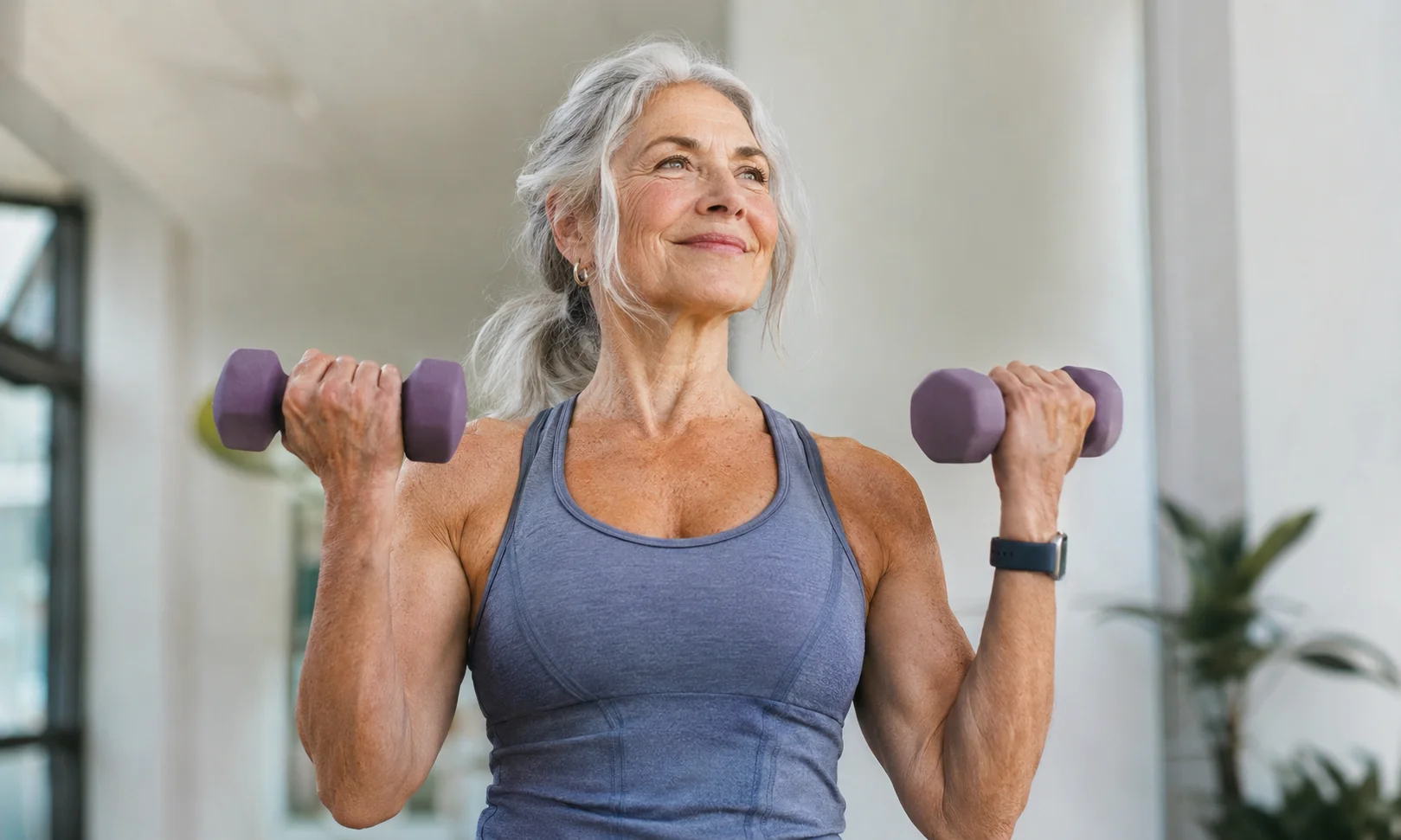
Muscles and movement: Resistance exercise challenges muscles to do work. That can help people keep doing ordinary things such as getting out of a chair, lifting shopping or climbing stairs.
Balance and independence: Balance practice matters because avoiding falls is important for keeping independence in older age. Strong muscles alone do not answer every balance problem.
Mood and thinking: Movement can support psychological wellbeing, although any one programme should not be sold as a cure for dementia or depression.
The aim is less about looking younger on a test and more about being capable of doing the things you value. The WHO Europe physical-activity guidance also discusses benefits for health and wellbeing, while reminding readers that activity recommendations apply across a wide range of abilities.
What we still do not know
Observational studies find that people who move more often experience better health outcomes, but those studies cannot prove that activity causes every difference. People in better health may also be more able to exercise in the first place.
The WHO recommendations summarise evidence across populations; they cannot tell you the perfect routine for your specific age, medical history or goals. Exercising much harder is not automatically better. Injuries, illness, mobility limitations and recovery needs all matter.
What this means for you
If you are currently inactive, the useful first question may be 'What kind of movement can I repeat comfortably?', not 'How do I achieve the perfect longevity score?'
Different activities do different jobs: build a routine that includes movement for your heart, some kind of strength challenge and, when relevant, balance practice. People with major conditions, recent surgery, unexplained symptoms or a high risk of falls should work with a qualified clinician on an appropriate plan.
There is no magic age-reversal claim here. The benefit is helping your body continue to work well.
Sources and conflicts
This guide draws on WHO public-health recommendations, rather than a commercial fitness programme. It does not endorse a gym, wearable, supplement or paid exercise plan. The WHO recommendations are population-level guidance, not individual medical advice.
Sources and further reading
- World Health Organization — physical activity guidance for adults and older adults
- WHO guidelines on physical activity and sedentary behaviour
- WHO Europe — physical activity recommendations and benefits
A source shows where a claim comes from; it does not automatically prove that the claim is true.
Spotted something that needs correcting? Contact the editorial team.