

Lindsay Lohan’s skincare: what she said, what remains rumor and what treatments cost
Her own comments offer a narrower picture than the speculation. Here is what the evidence says about her disclosures, treatment risks and generic US costs.

In 30 seconds
Lindsay Lohan says she uses eye patches, is interested in lasers and has had Morpheus8 once. That is not a complete medical history, and a public photo with a dermatologist does not establish who performed any treatment. Radiofrequency microneedling research suggests potential benefits for facial skin, but studies are varied and often short. Serious complications have also been reported. Generic treatment prices are not evidence of what Lohan spent.
Reader questions answered
What has Lindsay Lohan herself said about skincare and treatments?
In a May 2025 ELLE interview, Lohan described using eye patches in the morning, cold water, drinks and testing skincare serums. She said her skin became sensitive after she had her son and that she changed her routine. She also discussed developing a beauty line.
On procedures, she expressed interest in lasers and said she had tried Morpheus8 once. She said she did not think she had undergone Fraxel. Her general comment that everyone does Botox was not an explicit disclosure that she personally had it. These are her statements to an interviewer, not medical records; they do not establish a complete routine, treatment dates or providers.
What did she say about facelift rumors?
After her publicist discussed speculation about a facelift, Lohan replied: “when? With what time? Where?” Her rhetorical response challenges the rumor, but it is not a detailed account of every treatment she may or may not have had. The ELLE interview supports reporting her response—not presenting online theories as a confirmed operation.
Which dermatologist is publicly connected to her?
El País reported that the founder of a Dubai clinic posted a photograph with Lohan on December 5, 2024, alongside a caption about trust in their relationship. The dermatologist is Dr. Radmila Lukian, identified both in HELLO! coverage of her public post with Lohan and in the clinic biography.
That is a documented public connection, not a procedure record. It does not establish that Lukian performed Lohan’s reported Morpheus8 treatment, a facelift or another particular procedure. The clinic biography describes Lukian’s background but is promotional and does not independently establish treatment details. A dermatologist associated publicly with a celebrity should not be described as that celebrity’s surgeon on this basis.
What remains unknown about her private care?
Beyond Lohan’s own disclosures, these sources do not establish a full list of procedures, their dates, providers, results or her personal costs. Her Morpheus8 comment does not identify where or by whom it was administered. A photograph and changes in appearance cannot fill those gaps. The interview and reported photograph support only the narrower claims above.
What are lasers and radiofrequency microneedling used for?
Laser skin treatments and resurfacing are broad categories used for visible skin concerns. Radiofrequency, or RF, microneedling is used for concerns including wrinkles, texture and laxity. They are not interchangeable treatments, and results depend on the device and protocol. Lohan’s interest in lasers does not establish that she received a particular laser treatment.
A systematic review of RF microneedling included 20 studies and 558 patients, with four randomized trials. Devices and protocols varied; many studies lacked strong controls, and most outcomes were reported only up to six months. That limits confidence about lasting results and comparisons between devices.
One randomized split-face study followed 26 adults with facial laxity for three months. Both sides received ultrasound; one side also received fractional RF microneedling. The combined-treatment side had better wrinkle and aesthetic ratings, and more than 90% of participants reported satisfaction. But the study tested a combination—not Morpheus8 alone—and did not compare RF with an untreated face. It cannot establish long-term benefit or rule out rare harms. Category-level findings are not retail-brand proof or evidence of facelift-equivalent results.
What risks and downtime can these treatments involve?
In the small combination study, redness, purpura and swelling resolved without special intervention. Fat thickness also fell significantly in some measured cheek areas. That short study is not a reliable estimate of how often uncommon complications occur.
Separately, the US Food and Drug Administration has reported serious complications associated with certain uses of RF microneedling, including burns, scarring, fat loss, disfigurement and nerve damage. Adverse-event reports do not establish their frequency. The mild effects observed in a small trial and the FDA reports are not contradictory: a small trial can miss uncommon harms.
Recovery varies with the device and depth. For a proposed laser, ask specifically about expected downtime and pigment or scarring risks for your skin. These sources do not provide a dependable personal recovery estimate.
What do comparable treatments cost—not Lohan’s bills?
The American Society of Plastic Surgeons’ cost page reports US averages of $1,829 for skin resurfacing and $697 for laser skin treatments. These are broad generic categories, not Lohan’s spending, and neither is an RF microneedling-specific quote. Some related expenses are excluded, and the page does not clearly state the statistical year.
No independently sourced generic RF microneedling price was established in this dossier. Ask for a written local estimate that specifies the number of sessions and all charges rather than assuming either average applies.
What should I check before choosing a provider?
Verify the provider’s local license and training, and ask about experience with the specific device and your skin type. Find out who will actually perform the procedure. Discuss the likely benefit, alternatives—including no procedure—expected recovery, aftercare and what happens if a complication occurs. Request an itemized total and the proposed number of sessions.
In the US, ask about the device’s FDA clearance and intended indication. The FDA describes RF microneedling as a medical procedure and recommends a trained, licensed provider; its devices should not be used at home. Licensing and scope-of-practice rules differ by location, so check the relevant regulator.
Authentic event photograph, not medical evidence
A real April 2025 CinemaCon portrait of Lohan by photographer Gage Skidmore is proposed for this article under CC BY-SA 3.0. The photograph documents an event, not a treatment or a named surgeon. Its credit, licence link, any conversion notice and appropriateness alongside unconfirmed surgical rumours require founder approval.

What this means for you
Use the celebrity story as a prompt for questions, not a treatment plan. Decide which concern, if any, you want to address, then compare a proposed procedure with waiting or choosing no procedure. Ask what improvement is realistic for your skin and whether the evidence applies to the exact device being offered. A recognizable brand or a celebrity connection does not answer those questions.
The conclusion could change with larger, longer controlled studies comparing specific devices and documenting harms, or with an authoritative public disclosure from Lohan about her own care. Neither speculation nor a clinic photograph supplies that missing evidence.
Sources and conflicts
Study and published US price pages spot-checked 4 November 2026. All study figures and commercial claims require final founder review.
The celebrity account relies on Lohan’s ELLE interview, El País reporting and the clinic’s promotional biography. The RF trial reported university and public research funding. Its short follow-up and small sample limit safety conclusions; the FDA’s serious-event reports do not provide a complication rate. The research search was not exhaustive, and a comprehensive independent check for corrections or retractions was not completed.
Sources and further reading
- Lindsay Lohan Is So Back — ELLE, May 27, 2025
- La era de los inyectables indetectables — El País
- About Dr. Radmila Lukian — Lucia Clinic
- Potential Risks with Certain Uses of Radiofrequency Microneedling — FDA
- Combined Microfocused Ultrasound and Microneedle Fractional Radiofrequency — randomized split-face study
- Radiofrequency Microneedling for Facial Rejuvenation: A Systematic Review
- Skin Rejuvenation and Resurfacing Cost — American Society of Plastic Surgeons
- HELLO! - December 2024 public dermatologist post and correct name
- Wikimedia Commons - Gage Skidmore 2025 photo and terms
- Creative Commons BY-SA 3.0 licence text
A source shows where a claim comes from; it does not automatically prove that the claim is true.
Spotted something that needs correcting? Contact the editorial team.
Related reading
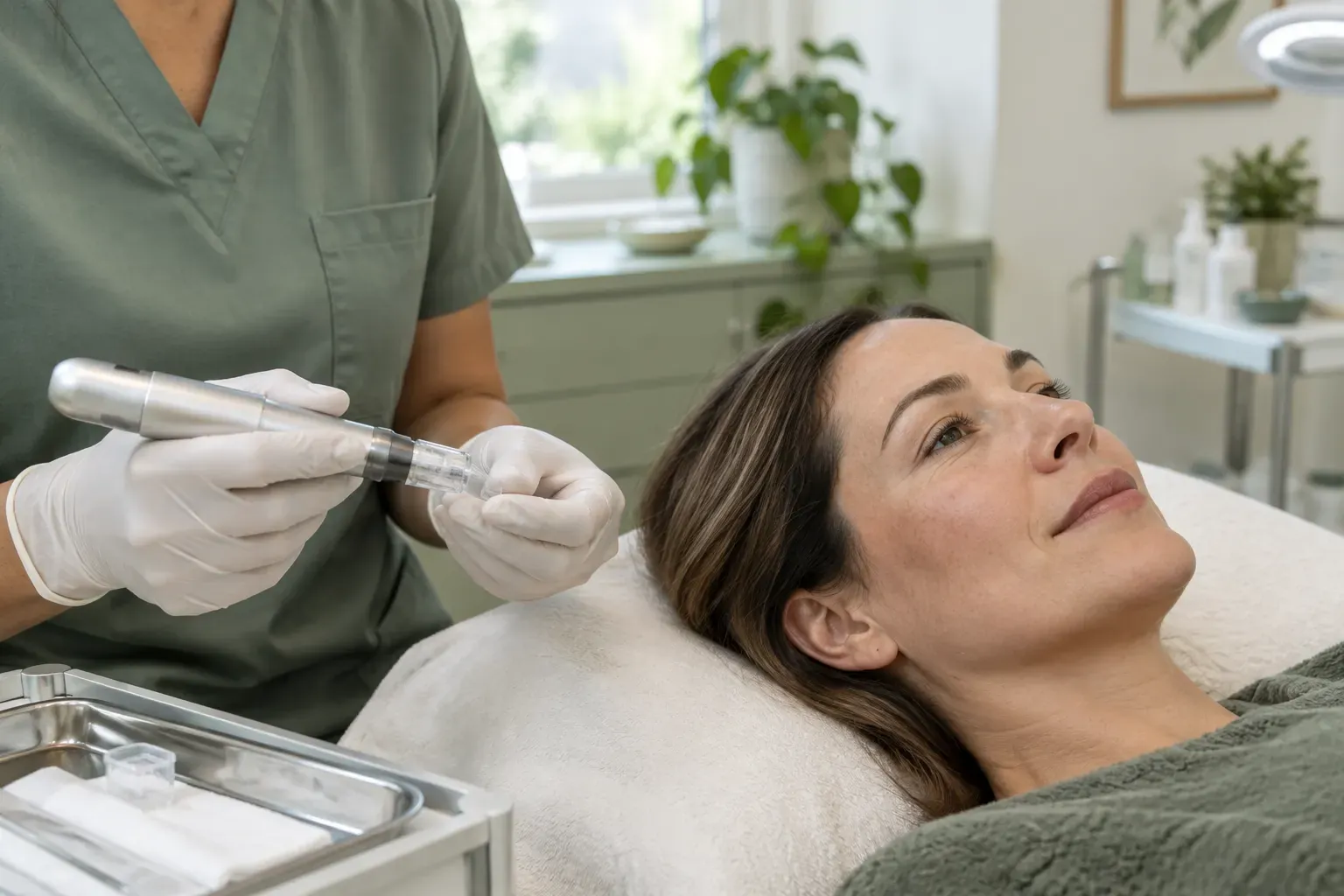
Microneedling and RF microneedling: benefits, recovery, risks and real prices
Both treatments have been studied for acne scars and other skin concerns. Radiofrequency adds heat, settings and important safety questions—not a guarantee of better results.
4 November 2026

Can a skin cream really reverse its biological age? The early RLS-1496 story
A small experimental study reported changes in skin-age biomarkers. Those numbers are not proof that wrinkles disappeared or that people became younger.
4 November 2026
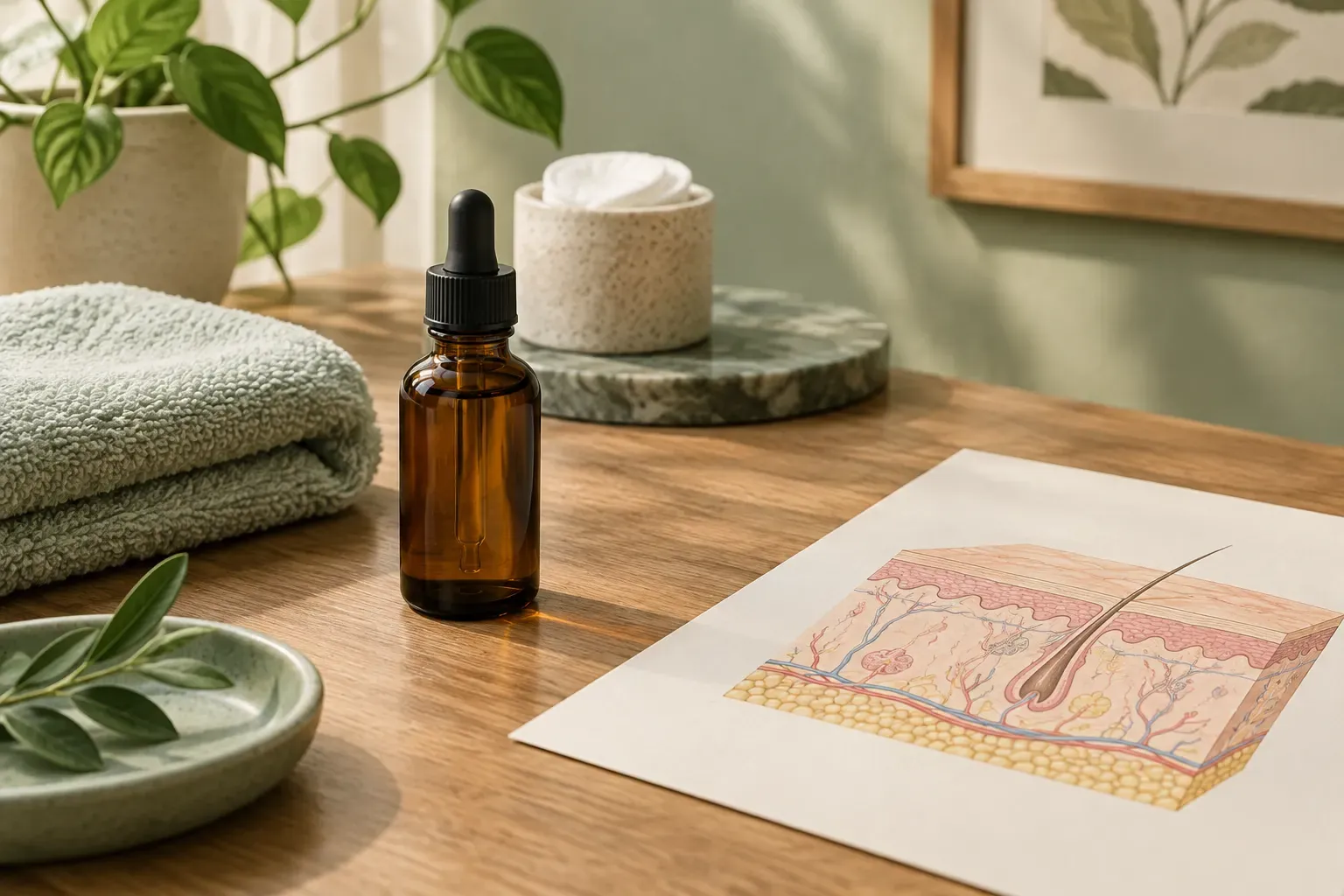
Exosome facials: promising research, unanswered safety questions
Small human studies offer early clues, but they do not establish that an exosome facial is a reliable anti-aging treatment.
4 November 2026