
Protein after 50: can food choices help preserve muscle?
Adequate protein matters for muscle, but you may not need a powder. Here's what older-adult trials show and how to judge the products.
In 30 seconds
- Protein is important for building and maintaining muscle, but it is available in ordinary food as well as powders.
- Some clinical studies find benefits when protein supplements are combined with resistance exercise in older adults. Other studies find less consistent results.
- More protein is not automatically better, and a supplement is not a proven anti-ageing treatment.
- Before paying for powder, check whether you need it, read its label, and consider individual health conditions.
Why protein matters as we age
Protein is used to build and repair tissue. Maintaining strength also depends on physical activity, adequate energy intake and overall health. No single food or tub of powder is a shortcut to a longer life.
The US National Institute on Aging recommends varied protein-containing foods for older adults, including seafood, dairy, soy, beans, peas and lentils. The point is a nutritious eating pattern, not a premium brand name.
For a person who struggles to eat enough, a convenient supplement might be useful. For someone who already meets their needs, it may add cost without a clear additional benefit.
What the human evidence suggests
One 2024 review examined protein supplements combined with resistance training among older people with sarcopenia, a condition involving reduced muscle and function. It included seven randomised studies and one quasi-experimental study, with 854 participants aged at least 60. The authors found improvements in measured muscle mass and strength, but acknowledged that the relatively small study base limits certainty.
Another 2024 meta-analysis of whey protein found a mixed picture: some lower-body strength benefit when supplementation was combined with exercise, but no consistent improvement across several measures such as grip strength, walking performance or total lean body mass.
These findings need careful interpretation. Trials recruit different people, use different exercises and supplements, and measure different outcomes. Results from people with sarcopenia do not automatically apply to every healthy person over 50.
Most importantly, a better muscle measurement is not evidence that a supplement extends human lifespan.
Why food may be enough
Your body needs amino acids from protein for normal function. The NIH Office of Dietary Supplements explains the role of dietary protein in muscle protein synthesis and recovery following exercise.
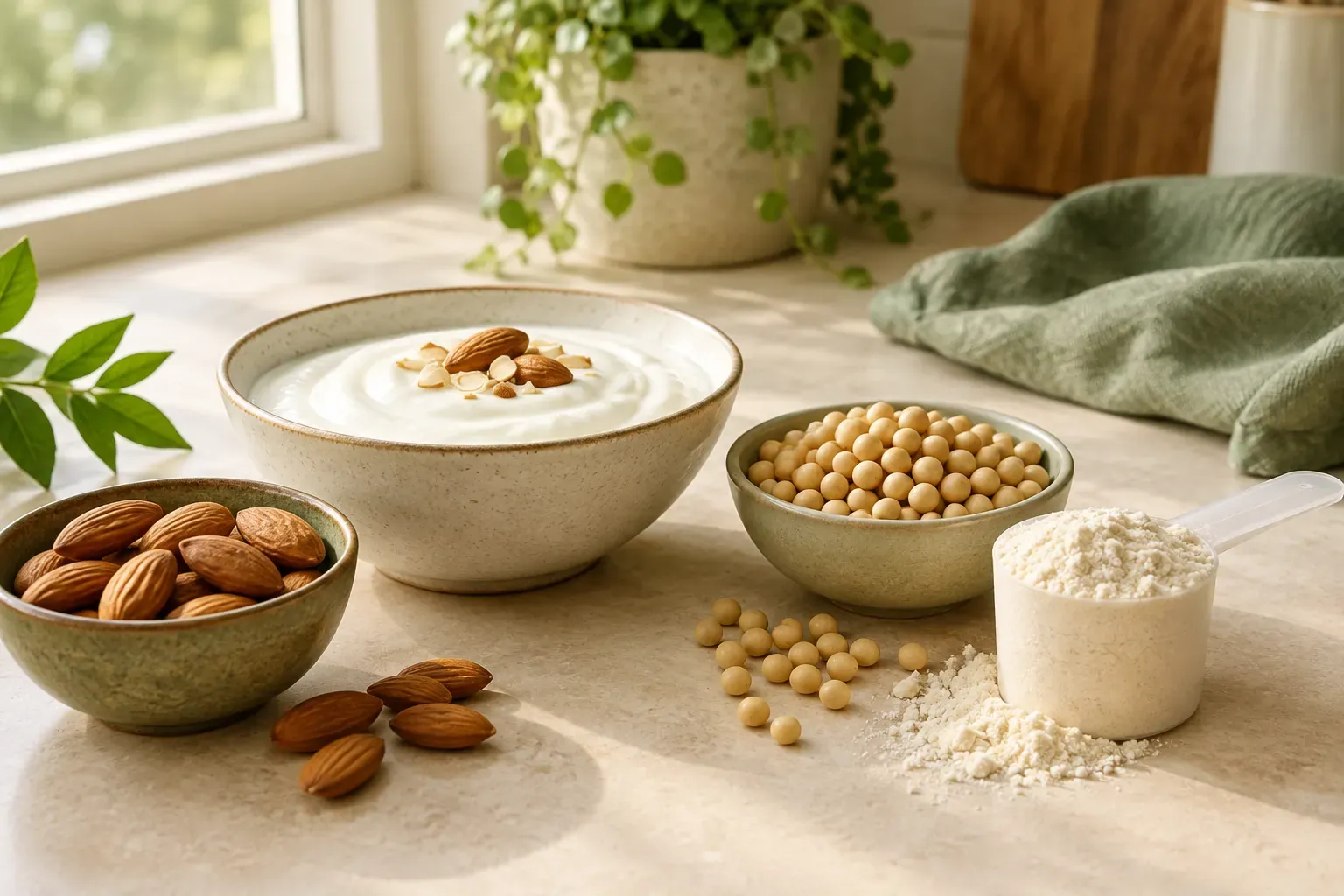
But a supplement is simply an additional protein source. It is not automatically more effective than eating an adequate diet. If you enjoy yoghurt, eggs, legumes, fish, tofu or other protein foods, you may already be getting what you need without a new purchase.
Older adults with poor appetite, significant weight loss or difficulty eating may have different needs. A clinician or dietitian can help distinguish undernutrition from marketing-driven anxiety.
Interested in trying a protein powder?
Start with what the label can actually tell you.
Protein per serving. Check grams of protein and the number of servings in the package, rather than relying on the size of the tub or the word 'premium'.
Ingredients and allergens. Whey usually comes from milk. Plant products vary too. Check for ingredients you cannot tolerate and for unnecessary additions.
Price and purpose. A powder may be convenient, but it should solve a real nutritional problem. We have not verified current prices or reviewed specific brands, so we cannot rank the best value options here.
Individual risks. Protein needs can differ substantially for people with kidney disease. The National Kidney Foundation recommends personal dietary guidance in that setting. Do not adopt high-protein advice meant for somebody else.
What we still do not know
We do not know whether any one retail protein powder offers special longevity benefits. Reviews of supplement trials differ in methods and populations, and many do not test outcomes such as frailty, disability or survival over long periods.
A product can be useful for convenience without being scientifically superior to food. The question is what it changes for you, not how futuristic the packaging looks.
What this means for you
Before shopping, take stock of your current meals, physical activity and goals. Adequate food and appropriate strength exercise are the foundation. If there is a genuine gap, a straightforward protein product may help meet it.
People with kidney disease, complex medical conditions or persistent weight loss should seek individual advice. This article and its Reader Guide are general information, not a prescription.
Sources and conflicts
Our guide uses NIH nutritional advice, published human trial reviews and kidney-health guidance. We have not independently tested these products or verified customer reviews. The Ageless Ape Reader Guide below includes dated New Zealand manufacturer price examples. These illustrate what different protein powders can cost, rather than ranking the best products across the market. Prices and availability may change, and no manufacturer has paid to be featured. No manufacturer is endorsed and no affiliate link is included.
Sources and further reading
- NIA — Healthy meal planning for older adults
- Whaikid and Piaseu (2024) — Supplements and resistance training
- Al-Rawhani et al. (2024) — Whey protein in older adults
- NIH ODS — Exercise and athletic performance supplements
- National Kidney Foundation — Protein and CKD
A source shows where a claim comes from; it does not automatically prove that the claim is true.
Spotted something that needs correcting? Contact the editorial team.
Related reading
Biological age tests: what your DNA age number can and cannot tell you
A test might call you 48 when your calendar says 55. But that number is not a diagnosis, and it doesn't prove you have added years to your life.
4 November 2026

Sleep and healthy ageing: what human studies can actually tell us
Better sleep supports everyday wellbeing, but no bedtime trick or smartwatch score proves that you have reversed ageing.
4 November 2026
Mouse, marker or lifespan? Four questions that make longevity headlines clearer
A dramatic result in a mouse or a biological-age score can be worth studying. It doesn't automatically mean people will live longer. Here's a quick way to tell the difference.
4 November 2026