

Sunscreen, retinoids and vitamin C: what really helps ageing skin?
A look at three popular skincare ingredients, the difference between prevention and treatment, and why more expensive does not always mean better supported.
In 30 seconds
- Sun exposure is a major cause of visible skin ageing. Regular broad-spectrum sunscreen has stronger evidence than many fashionable anti-ageing products.
- Prescription retinoids such as tretinoin can improve some wrinkles and sun-related skin changes, but they can also irritate skin and are unsuitable during pregnancy.
- Vitamin C skincare is promising for some concerns, but products differ widely and the evidence is less straightforward.
- No cream stops ageing. Choose for your skin and the problem you actually want to address.
What happened
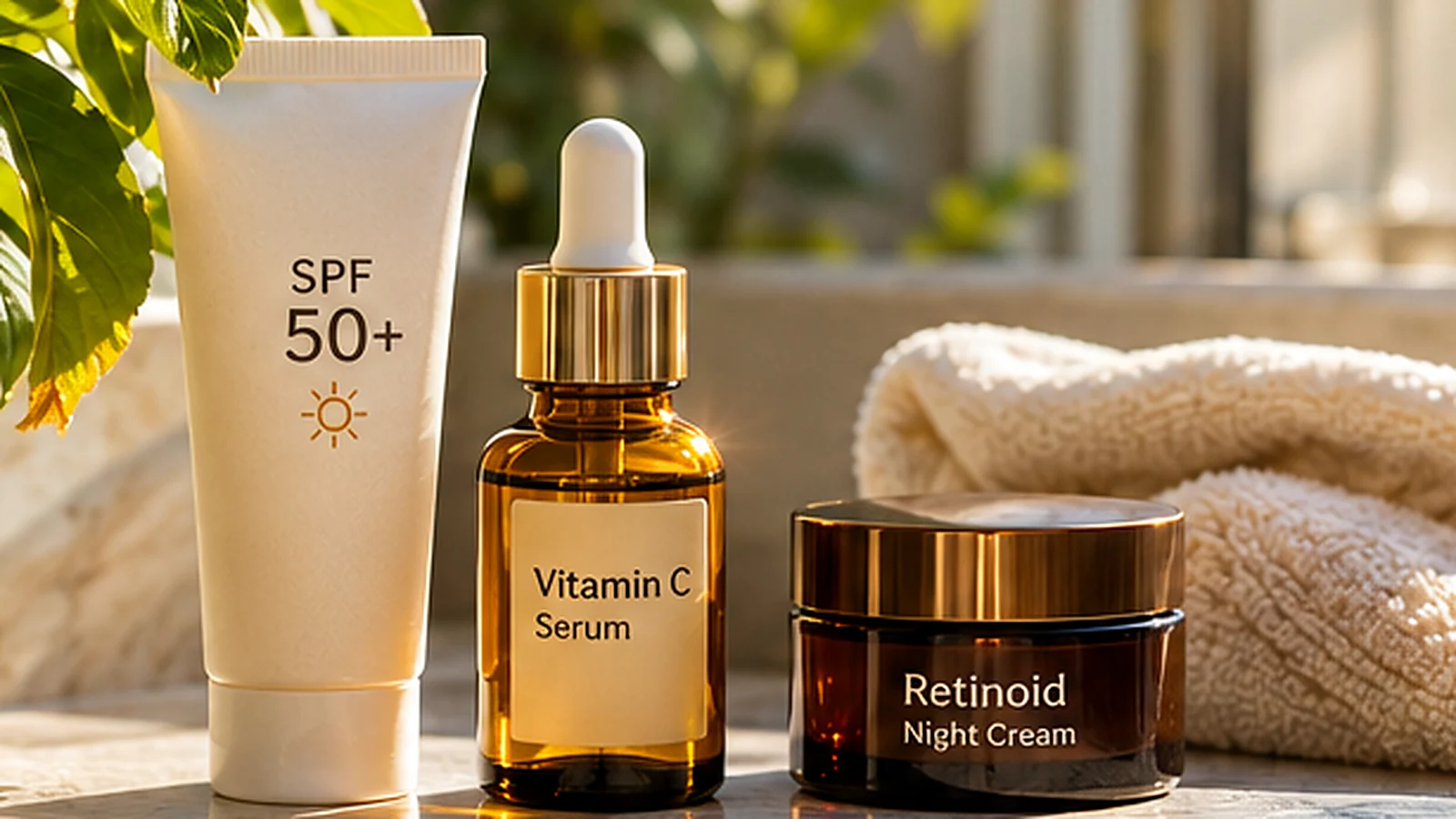
Anti-ageing shelves are crowded with serums promising firmer, brighter, younger-looking skin. Three ingredients appear again and again: sunscreen, retinoids and vitamin C.
Rather than rank brands we haven't independently compared, it is more useful to ask what the ingredient is supposed to do, what was tested in people, and whether the findings apply to the product on the shelf.
Sunscreen: preventing damage rather than turning back time
A community-based Australian randomised trial followed adults assigned to regular daily broad-spectrum sunscreen or discretionary use. Over roughly four and a half years, researchers found less measured skin ageing in the daily-use groups. The trial included 903 adults under 55, though not everyone had complete measurements.
This is meaningful because it followed people over years instead of relying on short-term photographs or a laboratory test. It does not mean any sunscreen reverses existing wrinkles or prevents every visible change.
The American Academy of Dermatology advises broad-spectrum sunscreen of SPF 30 or higher for outdoor protection, alongside protective clothing and shade. A product also needs to feel comfortable enough that you will actually use it.
Retinoids: more evidence, more need for caution
Retinoids are relatives of vitamin A. Some are prescribed; others, such as retinol, are found in over-the-counter products.
A two-year placebo-controlled trial in people with photodamaged facial skin found improvements with topical tretinoin compared with the comparison cream. Reviews of multiple trials also find evidence for improved signs of photoageing, but the size of improvement and how people tolerate treatment differ.
The American Academy of Dermatology warns that these products can irritate or dry skin. It advises that retinoids should not be used during pregnancy; people with sensitive or inflamed skin need extra care and professional advice.
A trial of prescription tretinoin does not prove that every shop-bought 'retinol' product has the same effect.
Vitamin C: interesting, but not a universal fix
Vitamin C is an antioxidant often sold in serums. A 2023 systematic literature review narrowed more than 5,000 search records to just seven eligible studies. Every included study used vitamin C alongside other ingredients or treatments. That makes it difficult to isolate what vitamin C itself contributed to changes in wrinkles. Different formulations, study durations and outcome measures also make direct comparisons difficult.
Vitamin C may have a place in skincare, but the review called for more high-quality comparative research. Consumers should be sceptical of a brand that treats an ingredient study as proof that its exact serum reduces wrinkles. We have not independently compared individual products here.
Why it matters
The first useful decision may not be 'Which is the most expensive product?' but 'Am I trying to prevent sun damage, improve existing fine lines, or address a specific skin condition?'
Different goals require different evidence. Using several strong active products together can also make skin feel worse by causing irritation.
What we still do not know
Results from a controlled study are not a promise for every age, skin tone or skin condition. Product formulations matter. Neither a high price nor popularity online establishes effectiveness. We have not evaluated current retail prices, comparative customer reviews or specific brands, so this article does not rank the 'best' products.
What this means for you
A simple comparison: Sunscreen helps prevent further sun-related damage. Prescription tretinoin has evidence for improving some existing sun-related skin changes, with irritation and pregnancy-related cautions. Vitamin C has less certain, formulation-dependent evidence for wrinkles. None replaces an individual assessment of skin problems.
Start with what has a sensible, established purpose. Check the active ingredient and product instructions rather than marketing phrases like 'age reversal'. People with skin disease, pregnancy, strong irritation, medication interactions or concerns about pigmentation should speak with an appropriately qualified professional.
If we later review individual products, we will explain why each was selected, verify its current price and product-specific evidence, and label any commercial links. This guide is about the ingredients, not an endorsement of a particular purchase.
Sources and conflicts
The sunscreen and tretinoin studies are published human research. Dermatology guidance comes from a professional association. The vitamin C review included seven studies, all using vitamin C with other ingredients or treatments, so it cannot establish the isolated effect of a particular vitamin C serum. We have not inspected the full funding disclosures or verified whether the vitamin C review's conclusions apply to particular brands. Product-specific claims and prices require a separate review.
Sources and further reading
- Hughes et al. — sunscreen and prevention of skin aging, randomised trial (2013)
- Two-year randomised placebo-controlled trial of tretinoin for photodamaged skin
- American Academy of Dermatology — retinoid or retinol?
- American Academy of Dermatology — choosing anti-aging skincare products
- Systematic literature review of topical vitamin C on wrinkle appearance (2023)
A source shows where a claim comes from; it does not automatically prove that the claim is true.
Spotted something that needs correcting? Contact the editorial team.
Related reading
Can an LED face mask improve wrinkles?
Small human trials offer some encouragement, but they do not prove that every mask works—or that changes last.
3 November 2026

Mouse, marker or lifespan? Four questions that make longevity headlines clearer
A dramatic result in a mouse or a biological-age score can be worth studying. It doesn't automatically mean people will live longer. Here's a quick way to tell the difference.
4 November 2026

Biological age tests: what your DNA age number can and cannot tell you
A test might call you 48 when your calendar says 55. But that number is not a diagnosis, and it doesn't prove you have added years to your life.
4 November 2026