

Creatine after 50: a sensible strength aid or another longevity promise?
Human trials suggest a modest strength benefit when some older adults combine creatine with resistance training. Claims about brain health, bones and a longer life need a different standard of proof.
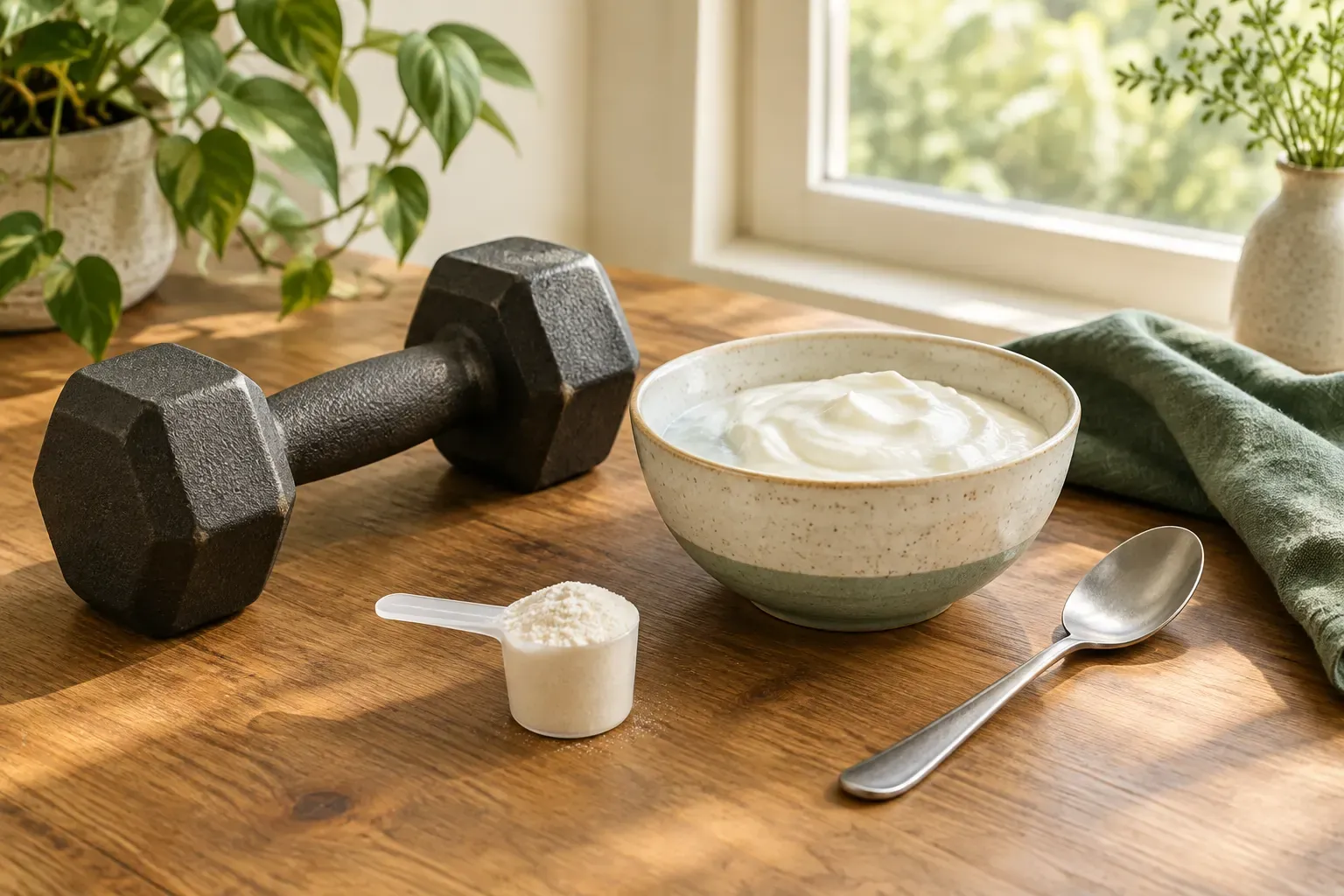
In 30 seconds
- Creatine is a compound your body uses to help muscles produce energy during short bursts of effort.
- Research in older adults suggests a small added strength benefit when creatine is used alongside resistance training. Findings for physical function and muscle size are less certain.
- That does not mean a powder prevents ageing or adds years to life. If shopping, compare plain creatine monohydrate, pack size and price before paying for branding.
What is creatine?
Creatine is produced in the body and is found in some foods. It helps store readily available energy for demanding muscle work. The US National Institutes of Health describes many trials finding benefits for repeated short, intense exercise, particularly alongside a training programme.
It is not the same as protein. A protein-rich meal provides building blocks for tissues; creatine helps the energy system that powers intense effort. Neither removes the need for a nutritious diet or appropriate activity.
Does it work for older adults?
A 2026 systematic review and three-level meta-analysis assessed 11 randomised trials in adults aged at least 60 who combined creatine with resistance training. It found a small average additional benefit in muscle strength. The authors rated the certainty for that strength finding as moderate.
The same analysis did not establish significant added benefits for muscle mass or physical function. Results also depend on who was studied. They do not automatically apply to frail people or people with complex health conditions.
A different systematic review reported improvements in some strength and lean-tissue outcomes across eight trials. That helps explain why marketing headlines can sound much more confident than a single evidence assessment. Different trial sets, methods and outcome measures can produce different conclusions.
The practical constant is resistance exercise itself. A supplement without suitable training has not been demonstrated to reproduce the full benefits of strength training.
What about memory, bones and living longer?
Creatine has been studied for other potential effects, including thinking and bone health. The evidence is not equally strong across outcomes. A benefit in a gym strength test does not prove a person will avoid dementia, fracture a hip less often or live longer.
We should be especially careful with claims that a product is 'for longevity'. None of the research cited here proves an extension of human lifespan. And a molecule that helps with exercise performance does not automatically change the biological processes of ageing.
Buying guide: what matters more than a fancy label?
The version used most widely in trials is creatine monohydrate. The NIH review notes that more expensive alternative forms have not been proven superior for muscle performance or safety.
For two concrete US manufacturer examples checked 4 November 2026, NOW Sports displayed a sale price of US$24.74 for its 21.2 oz powder, while Thorne listed US$44 for 90 servings. Those packs have different total amounts. Neither price measures clinical quality or implies a brand has unique anti-ageing effects.
The Reader Guide below links to both official product listings and separates independent studies of the ingredient from manufacturer marketing. No product was independently tested by Ageless Ape. Price and stock outside the United States were not verified.
What are the drawbacks?
The NIH fact sheet reports water-related weight gain and occasional digestive symptoms. Short-term safety in healthy adults is relatively well studied, but individual circumstances matter. People with kidney disease, complicated medicines, or other medical concerns should discuss supplements with a qualified professional rather than follow a social media regimen.
Purity and labelling also deserve attention. Third-party quality certifications can help with a manufacturing question, but do not prove the product will slow ageing. A high price, 'micronised' wording or claims about cellular energy are not proof of extra health benefits.
What this means for you
If you are trying to preserve strength with age, suitable resistance training and enough food remain foundational. Creatine may add a modest benefit for some people, but buying it should be a practical, informed choice—not an attempt to 'hack' biological age.
Sources and conflicts
We distinguish clinical trials from seller claims and use US manufacturer prices only as dated examples. Ageless Ape did not conduct product tests, collect independent customer reviews, receive product payment or place affiliate links in this guide.
Sources and further reading
- 2026 meta-analysis — creatine plus resistance training in older adults
- 2025 meta-analysis — muscle strength and lean tissue
- NIH ODS — Exercise and athletic performance supplements
- NOW Sports — creatine monohydrate official US pricing
- Thorne — creatine official US pricing
A source shows where a claim comes from; it does not automatically prove that the claim is true.
Spotted something that needs correcting? Contact the editorial team.
Related reading
Protein after 50: can food choices help preserve muscle?
Adequate protein matters for muscle, but you may not need a powder. Here's what older-adult trials show and how to judge the products.
4 November 2026
Biological age tests: what your DNA age number can and cannot tell you
A test might call you 48 when your calendar says 55. But that number is not a diagnosis, and it doesn't prove you have added years to your life.
4 November 2026

Senolytics: are scientists really clearing away ageing cells in people?
Drugs that target damaged, non-dividing cells have shown intriguing early signals. Human trials still haven't proved that they make people live longer.
4 November 2026