

XPRIZE Healthspan: 20 finalists, a $101 million prize and a very big question
The competition wants therapies that improve muscle, thinking and immune function in later life. Its 2026 finalists are a milestone for research—not proof that an age-reversal treatment works.

In 30 seconds
- XPRIZE Healthspan is a research competition with a $101 million prize purse. It aims to encourage treatments that help older people stay capable and independent.
- In August 2026, the organisers named 20 finalist teams. Ten of them received $1 million milestone awards.
- The goal is to test meaningful improvements in muscle, thinking and immune function—not just a better-looking biological-age number.
- No finalist announcement proves a treatment works, restores ten years of health or makes people live longer.
What happened
There are plenty of claims about slowing ageing. XPRIZE Healthspan is attempting something more demanding: turning the ambition into measurable human research.
The competition started in 2023 and is scheduled to continue to 2030. According to its official competition page, it challenges research teams to develop interventions aimed at restoring aspects of muscle, cognitive and immune function in older adults.
'Healthspan' means the years of life spent in reasonably good health, as distinct from the total number of years a person lives. The difference matters. Living to an older age is not quite the same as remaining mobile, independent and able to enjoy everyday life.
On 11 August 2026, XPRIZE announced 20 finalists. Of those, ten received $1 million awards each, for $10 million in this round of milestone funding. The teams were announced from the United States, South Korea, Japan and China.
Those announcements deserve attention because they indicate which research approaches the competition has selected for its next stage. They are not clinical results establishing that any finalist therapy has already met the prize goals.
What are the teams trying to prove?
The central ambition is to see whether an intervention can meaningfully improve several kinds of function. The competition's stated benchmark is a minimum ten-year restoration target, with an ambitious twenty-year goal, for muscle, cognitive and immune function in adults aged 50 to 90, assessed through its specified research framework and within one year or less of treatment. This is the organisers' research target, not a demonstrated reversal of anyone's age.
That language needs care. 'Ten years younger' is an easy headline, but it can leave the wrong impression. A person might improve on a particular measure of strength, thinking or immune performance without becoming biologically ten years younger in every sense.
A credible result would need to show who was studied, how performance was measured, whether there was a comparison group, and whether any gain was large and lasting enough to matter.
The organisers' award announcement details the ten teams receiving milestone funding. The organiser's published timetable describes trials during 2026–2029 and an ultimate award phase planned for 2030. We would not treat inclusion on that list as an endorsement of a commercially available treatment.
Why it matters
This competition asks researchers to work toward results people can understand: moving well, staying mentally capable and maintaining physical resilience.
It may also help bring more investment and research attention to carefully measured human outcomes. But funding an approach and proving that approach are different achievements.
For readers, the useful question isn't simply 'Who won a million dollars?' It is 'What results will they show in people, and how convincing are those results?'
What we do not know yet
As of this 4 November 2026 editorial check, the award announcements establish which teams advanced, not clinical success. We do not know which, if any, finalist approaches will meet the ultimate prize criteria. A selected team may still face trial setbacks, safety problems, weak effects or results that fail to reproduce.
The competition's award size should not be confused with a prize already paid out in full. A $101 million announced prize purse describes the broader competition, not a guarantee that each team receives that amount.
What this means for you
This is worth following if you're interested in the frontier of healthy-ageing research. It is not a reason to buy an experimental treatment offered by someone borrowing the competition's name.
When a team announces results, look for the underlying trial, the comparison group, the patient population, the actual measured change and the safety information. We will revisit promising developments when evidence is published.
Sources and conflicts
XPRIZE is both the organiser and promoter of the competition; its announcements are authoritative for prize structure and team selection but not independent proof of therapeutic effectiveness. This report does not evaluate the clinical merits of any individual finalist. No sponsorship or commercial relationship with XPRIZE is identified here.
Sources and further reading
- XPRIZE — official Healthspan competition overview and targets
- XPRIZE — 20 Healthspan finalists announced, 11 August 2026
- XPRIZE — 10 finalist teams awarded $1 million each, 11 August 2026
A source shows where a claim comes from; it does not automatically prove that the claim is true.
Spotted something that needs correcting? Contact the editorial team.
Related reading
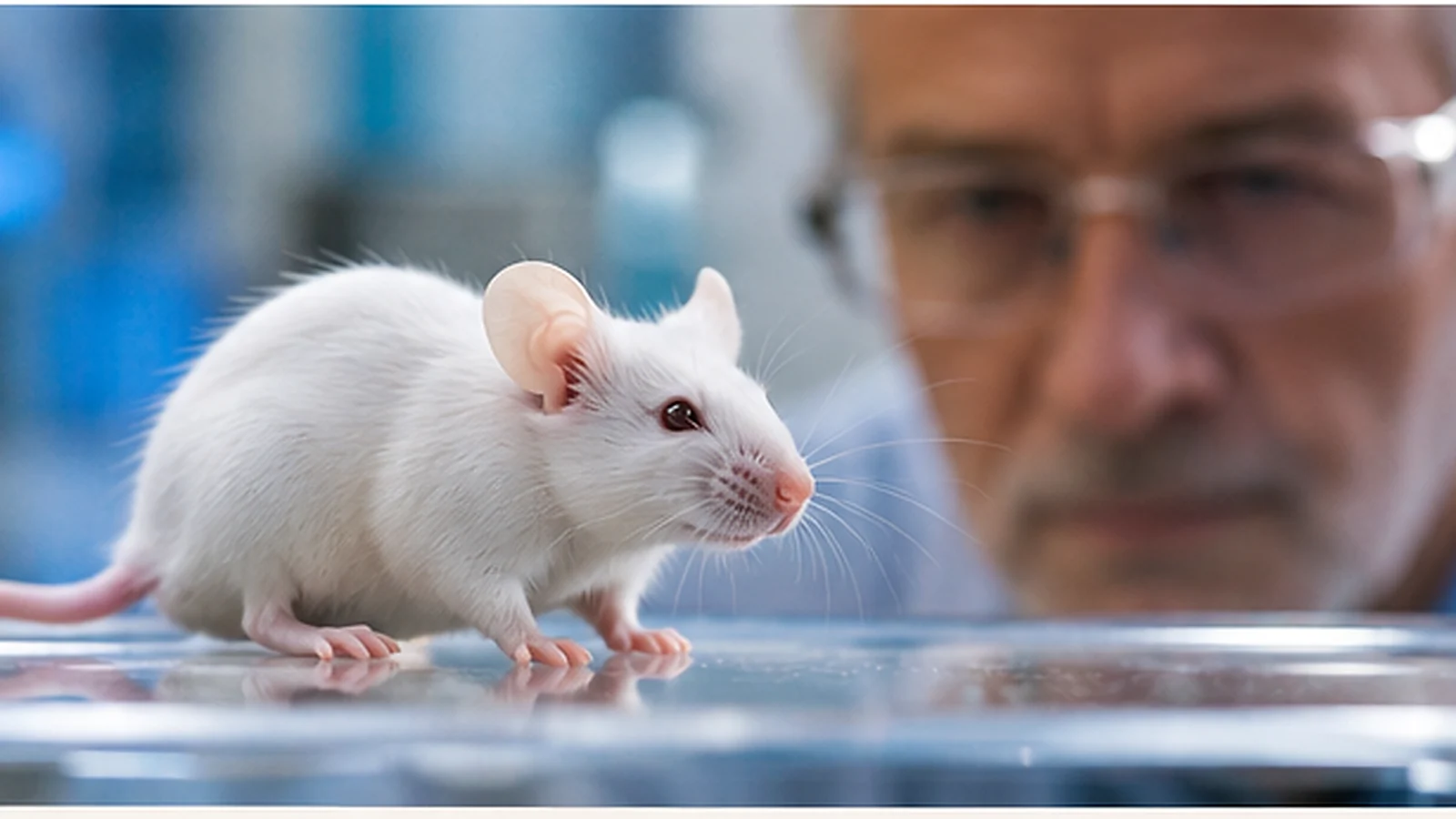
Mouse, marker or lifespan? Four questions that make longevity headlines clearer
A dramatic result in a mouse or a biological-age score can be worth studying. It doesn't automatically mean people will live longer. Here's a quick way to tell the difference.
4 November 2026

Biological age tests: what your DNA age number can and cannot tell you
A test might call you 48 when your calendar says 55. But that number is not a diagnosis, and it doesn't prove you have added years to your life.
4 November 2026

Sunscreen, retinoids and vitamin C: what really helps ageing skin?
A look at three popular skincare ingredients, the difference between prevention and treatment, and why more expensive does not always mean better supported.
4 November 2026